Your download link is delivered immediately via email after checkout
The Power of Delayed Gratification: Why Waiting Leads to Greater Success
Learn the power of delayed gratification and how choosing long-term rewards over instant pleasure can transform your discipline, productivity, and success.
HABIT BUILDINGPERSONAL GROWTHSELF-IMPROVEMENTTRANSFORMATIONDISCIPLINE
Polaris Star Editorial
3/9/20263 min read
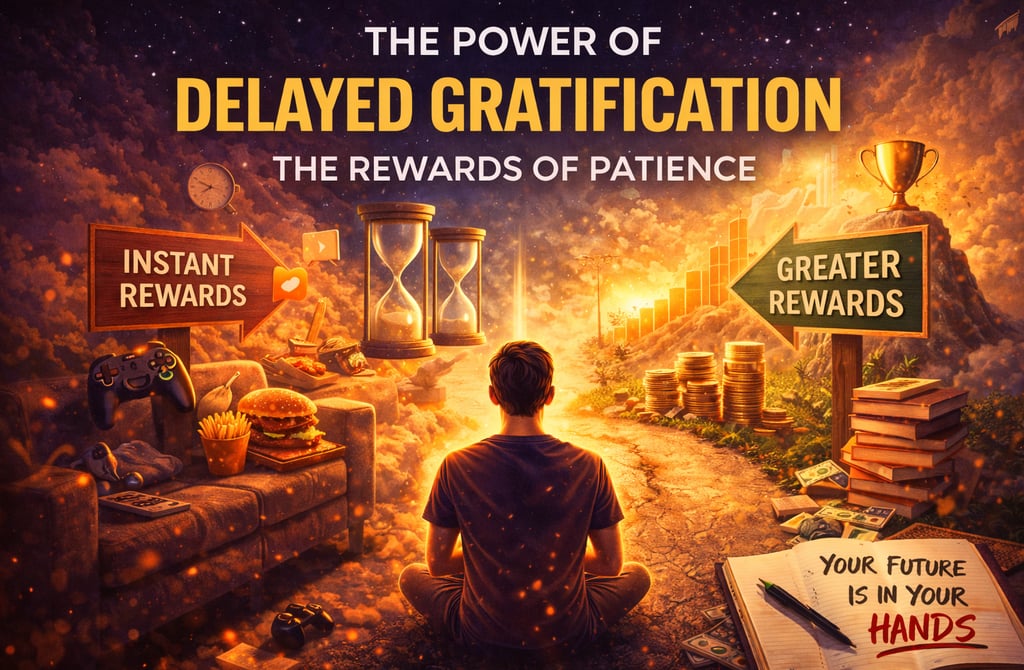
The Power of Delayed Gratification
Most people want success.
But very few are willing to wait for it.
We live in a world built around instant rewards.
Instant food.
Instant entertainment.
Instant messages.
Instant dopamine.
Your brain is constantly encouraged to choose the easiest and quickest pleasure available.
But the people who achieve meaningful success often follow a different principle.
They practice delayed gratification — the ability to resist immediate pleasure in order to gain a greater reward in the future.
And this single skill can change the trajectory of your life.
What Delayed Gratification Means
Delayed gratification simply means choosing long-term benefits over short-term pleasure.
Instead of doing what feels good now, you choose actions that will benefit you later.
Examples include:
studying instead of watching another episode
exercising instead of staying on the couch
saving money instead of spending impulsively
building a skill instead of scrolling social media
In each case, the immediate option feels easier.
But the long-term option builds a better future.
The Famous Marshmallow Experiment
One of the most famous studies about delayed gratification is the Stanford Marshmallow Experiment.
Researchers gave children a simple choice:
They could eat one marshmallow immediately.
Or wait a short period of time and receive two marshmallows instead.
Some children waited.
Others didn’t.
Years later, researchers discovered that the children who were able to delay gratification often showed better outcomes in areas such as academic performance and self-control.
The experiment highlighted an important idea:
The ability to wait for a better reward can strongly influence long-term success.
Why Instant Gratification Is So Tempting
Your brain naturally prefers instant rewards.
This happens because quick rewards trigger dopamine — the brain’s pleasure chemical.
Activities like:
social media
gaming
junk food
online entertainment
deliver immediate dopamine spikes.
Over time, the brain becomes accustomed to these quick rewards.
As discussed earlier in the Dopamine Detox Explained Simply article, this overstimulation can reduce your ability to focus on slower, meaningful goals.
Delayed gratification feels harder because the reward is not immediate.
But that difficulty is exactly what strengthens discipline.
Delayed Gratification and Discipline
Discipline and delayed gratification are deeply connected.
When you choose the harder option today, you strengthen your ability to control impulses.
Every time you resist an immediate reward, you train your brain to prioritize long-term outcomes.
This is why people who build strong discipline often achieve consistent progress.
They are willing to endure short-term discomfort for long-term improvement.
The Compounding Effect of Patience
Delayed gratification works because of compounding.
Small decisions repeated over time create massive differences in outcomes.
Consider two people:
Person A chooses comfort daily.
Person B chooses growth daily.
At first, the difference seems small.
But over months and years, the gap becomes enormous.
The person who consistently delayed gratification gains:
stronger habits
deeper knowledge
better skills
higher confidence
Patience compounds into progress.
Delayed Gratification and the Comfort Zone
One reason people struggle with delayed gratification is comfort.
As discussed in Comfort Is Killing Your Potential, the brain prefers easy routines.
Choosing delayed rewards requires stepping outside this comfort zone.
It means accepting temporary discomfort.
But that discomfort is what allows your abilities to expand.
Growth rarely happens in comfortable environments.
How to Build Delayed Gratification
Delayed gratification is not something you either have or don’t have.
It is a skill that can be trained.
Here are simple ways to strengthen it.
1. Pause Before Acting
When you feel the urge for instant pleasure, pause for a moment.
Ask yourself:
Will this help my future self?
This small pause helps break impulsive behavior.
2. Reduce Temptations
Your environment influences your decisions.
Reduce distractions such as:
unnecessary notifications
excessive social media
constant entertainment
This makes long-term goals easier to pursue.
3. Focus on Long-Term Vision
When the future goal becomes clear, resisting short-term temptations becomes easier.
Visualize what your life could look like if you stay consistent.
A clear future vision strengthens patience.
4. Reward Progress
Delayed gratification doesn’t mean removing all enjoyment.
It means structuring rewards wisely.
After completing meaningful work, allow yourself small rewards.
This balances discipline and enjoyment.
The Hidden Advantage of Delayed Gratification
People who practice delayed gratification gain something powerful.
They gain control over their impulses.
Instead of reacting automatically to every temptation, they make conscious decisions.
This control leads to better habits, stronger focus, and greater long-term success.
And over time, that control becomes one of the most valuable personal skills you can develop.
Final Thoughts: Patience Builds Success
The world encourages instant rewards.
But the greatest achievements rarely happen instantly.
They require patience.
They require discipline.
And they require the willingness to sacrifice short-term pleasure for long-term growth.
Delayed gratification is not about denying enjoyment.
It is about choosing a future that is worth the wait.
FAQ
What is delayed gratification?
Delayed gratification is the ability to resist immediate pleasure in order to receive a larger reward later.
Why is delayed gratification important?
It strengthens discipline, improves decision-making, and helps people focus on long-term goals.
Can delayed gratification be learned?
Yes. With practice, people can train themselves to resist impulses and prioritize future benefits.