Your download link is delivered immediately via email after checkout
The 1% Daily Improvement Strategy: Small Changes That Create Extraordinary Results
Learn how the 1% daily improvement strategy uses small consistent actions to create massive long-term success through the power of compound growth.
HABIT BUILDINGPERSONAL GROWTHSELF-IMPROVEMENTTRANSFORMATIONDISCIPLINE
Polaris Star Editorial
3/14/20263 min read

The 1% Daily Improvement Strategy
Many people believe success requires massive effort or sudden breakthroughs.
They imagine dramatic transformations.
A perfect plan.
A powerful opportunity.
A life-changing moment.
But the reality of progress is much quieter.
Real improvement often comes from small actions repeated consistently over time.
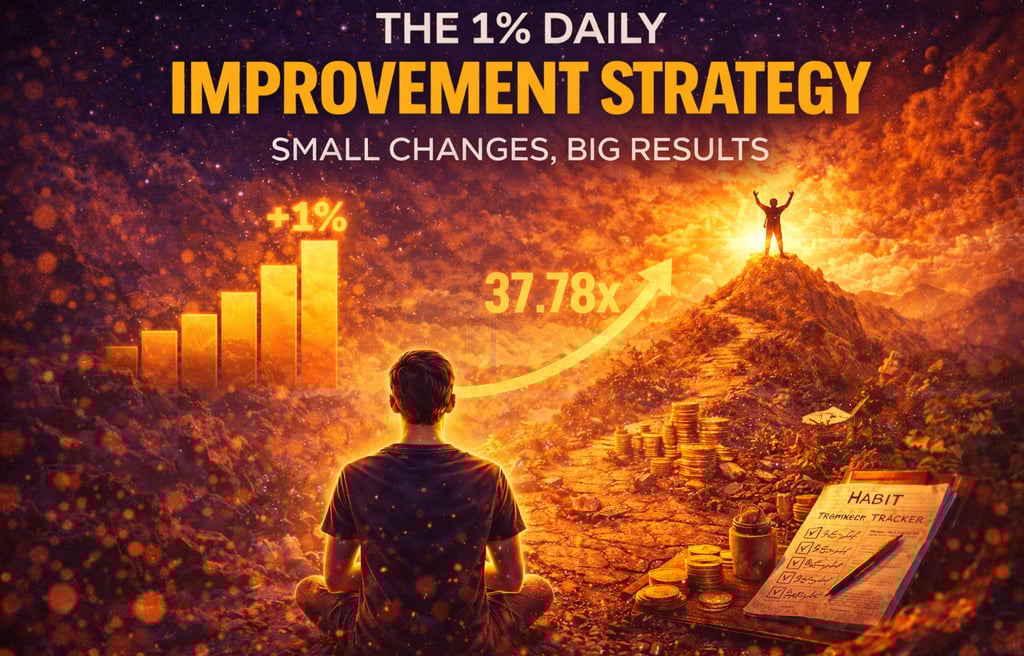
This idea is known as the 1% daily improvement strategy.
Instead of chasing dramatic change, you focus on becoming slightly better every day.
And over time, those small improvements compound into extraordinary results.
What the 1% Rule Means
The 1% rule is simple.
Improve one small aspect of your life by just 1% every day.
This improvement could be:
learning a new concept
practicing a skill
improving your habits
becoming slightly more disciplined
Individually, a 1% improvement seems small.
But when repeated consistently, the impact becomes powerful.
Small progress compounds.
The Power of Compound Growth
Compound growth means that progress builds upon previous progress.
Each improvement creates a foundation for the next one.
Imagine improving just 1% every day.
After a week, the change may seem small.
But after months or years, the difference becomes enormous.
This is the same principle that applies to investments, skills, and personal development.
Consistent progress creates exponential results.
Why Most People Ignore Small Improvements
The problem is that humans naturally look for fast results.
We want visible change quickly.
If results do not appear immediately, many people lose motivation.
But the 1% strategy works differently.
It focuses on long-term transformation instead of short-term excitement.
This mindset aligns closely with delayed gratification, which we discussed earlier.
Instead of chasing immediate rewards, you invest in gradual growth.
Small Habits Create Big Results
The 1% strategy works best when applied through habits.
Habits turn small actions into automatic behavior.
Examples of 1% improvements include:
reading a few pages daily
practicing a skill for 20 minutes
exercising briefly each day
learning something new consistently
These actions may seem insignificant in the moment.
But over time, they reshape your abilities and mindset.
The Role of Consistency
Consistency matters more than intensity.
A small habit practiced daily often produces better results than occasional bursts of effort.
For example:
Studying for 20 minutes every day is more effective than studying for several hours once a week.
Consistency strengthens habits.
And habits create momentum.
Why the 1% Strategy Builds Discipline
The 1% strategy is powerful because it removes the pressure of perfection.
You do not need to transform your life overnight.
You simply need to improve slightly.
This approach makes discipline easier.
Instead of overwhelming yourself with big changes, you focus on manageable actions.
Over time, these small wins build confidence and motivation.
Avoiding the Comfort Trap
One challenge in following the 1% strategy is comfort.
Small improvements require daily effort.
And sometimes the brain prefers convenience.
As discussed in Comfort Is Killing Your Potential, growth requires stepping beyond easy routines.
Choosing progress—even in small ways—helps you avoid stagnation.
The Hidden Advantage of Small Progress
Small improvements often go unnoticed at first.
The early stages may feel slow.
But something important happens during this phase.
You develop identity.
Each small improvement reinforces the belief that you are someone who grows consistently.
This connects directly with the idea discussed in How to Rewire Your Identity in 30 Days.
Repeated actions shape who you believe you are.
And identity drives long-term behavior.
How to Apply the 1% Strategy
Here are practical ways to implement this idea.
1. Choose One Area of Improvement
Focus on a specific area such as health, knowledge, or productivity.
Trying to improve everything at once can become overwhelming.
2. Start Small
Begin with actions that are easy to repeat daily.
The goal is consistency, not intensity.
3. Track Progress
Recording small improvements helps maintain motivation.
Use a habit tracker, journal, or checklist.
4. Focus on Long-Term Growth
Avoid judging progress too quickly.
The real power of the 1% strategy appears over time.
Patience is part of the process.
The Compound Effect of Daily Effort
When you improve slightly every day, your progress compounds.
Weeks become months.
Months become years.
And over time, the difference between consistent growth and stagnation becomes dramatic.
The people who embrace small improvements eventually build extraordinary results.
Not because they were extraordinary at the beginning.
But because they were consistent.
Final Thoughts: Progress Over Perfection
The 1% daily improvement strategy teaches an important lesson.
You do not need to be perfect.
You only need to be slightly better than yesterday.
Small steps create momentum.
Momentum creates progress.
And progress creates transformation.
Focus on improving a little each day.
And over time, those small improvements will change your life.
FAQ
What is the 1% daily improvement strategy?
It is the idea of improving small aspects of your life consistently each day to create long-term growth.
Why do small improvements matter?
Small improvements compound over time, creating large differences in skills, habits, and results.
How can I start using the 1% rule?
Choose one area of improvement and focus on making small daily progress through consistent habits.