Your download link is delivered immediately via email after checkout
The Complete Guide to Self Discipline: How to Master Your Mind and Take Control of Your Life
Learn the complete guide to self discipline and discover practical strategies to build consistency, control impulses, and achieve long-term success.
HABIT BUILDINGPERSONAL GROWTHSELF-IMPROVEMENTTRANSFORMATIONDISCIPLINE
Polaris Star Editorial
3/15/20264 min read
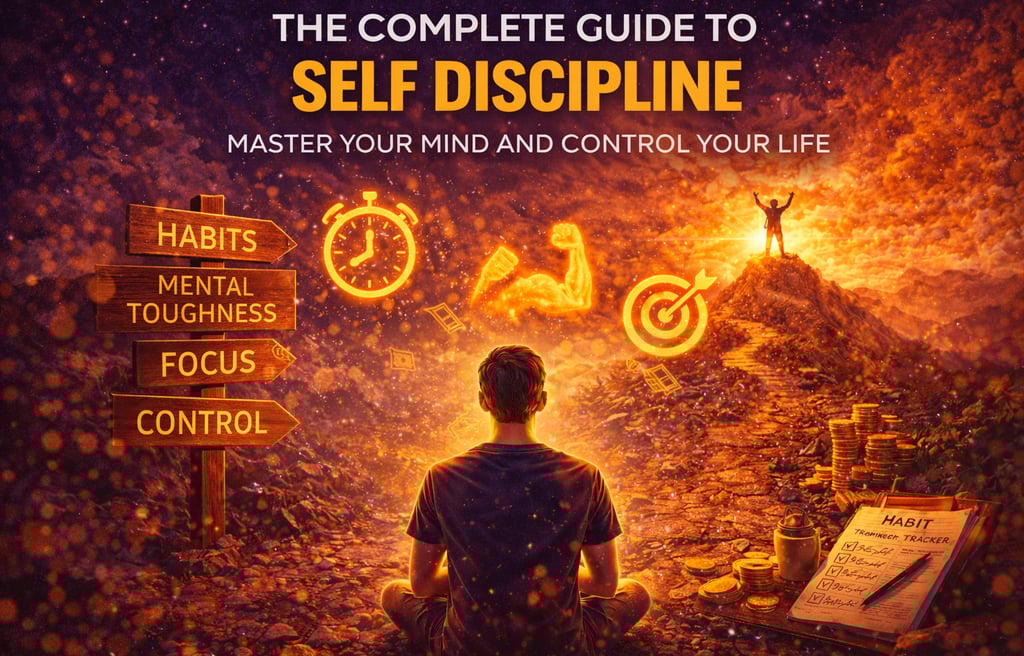
The Complete Guide to Self Discipline
Success is often misunderstood.
Many people believe successful individuals are simply more talented, lucky, or intelligent.
But when you look closely at the lives of high achievers, one quality appears again and again:
Self discipline.
Self discipline is the ability to control your actions, emotions, and impulses in order to pursue long-term goals.
It allows you to work when you feel tired.
It helps you stay focused when distractions appear.
And it keeps you moving forward even when motivation disappears.
In many ways, self discipline is the foundation of personal growth.
What Is Self Discipline?
Self discipline is the ability to choose what is right over what is easy.
It means controlling impulses and staying committed to your goals even when doing so is uncomfortable.
Examples of self discipline include:
waking up early to work on your goals
exercising regularly
focusing on meaningful work instead of distractions
resisting short-term pleasures for long-term rewards
Self discipline is not about punishment.
It is about aligning your actions with your values and long-term vision.
Why Self Discipline Is So Powerful
Self discipline creates consistency.
Consistency creates progress.
And progress creates results.
Without discipline, even the best ideas and goals rarely succeed.
A person may have strong motivation for a few days or weeks.
But when excitement fades, discipline becomes the force that keeps them moving forward.
This is why self discipline is often considered more important than talent.
Talent may create opportunity.
But discipline turns opportunity into achievement.
The Difference Between Discipline and Motivation
Many people rely heavily on motivation.
Motivation feels exciting.
It creates energy and enthusiasm.
But motivation is temporary.
It appears and disappears depending on mood and circumstances.
As discussed in Discipline vs Motivation, discipline is far more reliable.
While motivation depends on emotions, discipline depends on habits.
When discipline becomes part of your routine, you take action even when you do not feel motivated.
The Science Behind Self Discipline
Self discipline is closely connected to self-control, which is regulated by the brain’s prefrontal cortex.
This part of the brain helps you:
make decisions
control impulses
focus attention
When you repeatedly practice disciplined behaviors, you strengthen these neural pathways.
Over time, disciplined actions become easier.
This is why habits play such an important role in building self discipline.
The Role of Delayed Gratification
One of the strongest components of discipline is the ability to delay gratification.
Delayed gratification means choosing a greater reward in the future instead of a smaller reward immediately.
For example:
studying instead of watching another episode
saving money instead of spending impulsively
practicing a skill instead of seeking entertainment
In The Power of Delayed Gratification, we explored how this mindset allows people to achieve long-term success.
Self discipline often requires sacrificing short-term pleasure for long-term growth.
How Habits Strengthen Discipline
Discipline becomes easier when it turns into habit.
Habits reduce the need for constant decision-making.
Instead of debating whether to act, the action becomes automatic.
Examples of discipline-supporting habits include:
starting work at a fixed time
exercising regularly
reading daily
planning your day each morning
As discussed in 5 Habits That Changed My Life, small daily routines often create the biggest improvements.
The Comfort Zone Problem
Comfort can quietly weaken discipline.
When life becomes too comfortable, the brain avoids effort and challenge.
But growth rarely happens inside the comfort zone.
In Comfort Is Killing Your Potential, we discussed how constantly choosing comfort limits progress.
Self discipline often requires stepping beyond familiar routines and embracing discomfort.
How to Build Self Discipline
Self discipline can be developed through practice.
Here are practical ways to strengthen it.
1. Start With Small Commitments
Begin with small goals that are easy to maintain.
Examples include:
reading for 10 minutes daily
exercising briefly each morning
working on a skill for a short period
Small wins build confidence and momentum.
2. Remove Distractions
Discipline becomes easier when temptations are reduced.
Limit distractions such as:
unnecessary notifications
social media during work hours
constant entertainment
As discussed in Dopamine Detox Explained Simply, reducing overstimulation helps improve focus.
3. Focus on Consistency
Consistency matters more than intensity.
A small action repeated daily often produces better results than occasional bursts of effort.
This idea connects with The 1% Daily Improvement Strategy, which shows how small improvements compound over time.
4. Develop Mental Toughness
Discipline becomes stronger when you train your mind to tolerate discomfort.
In How to Build Mental Toughness, we explored how facing challenges builds resilience.
Each difficult task you complete strengthens your ability to stay disciplined in the future.
5. Track Your Progress
Tracking habits or goals creates accountability.
You can use:
a habit tracker
a journal
a checklist
Visible progress motivates consistency and reinforces disciplined behavior.
The Silent Power of Discipline
Self discipline often operates quietly.
It does not attract immediate attention.
But over time, it produces powerful results.
In The Silent Grind Philosophy, we discussed how consistent effort behind the scenes eventually leads to visible success.
Many people admire the final achievement.
Few see the years of disciplined effort that made it possible.
The Compound Effect of Discipline
The true power of discipline appears over time.
Small daily actions accumulate.
Weeks turn into months.
Months turn into years.
Eventually, the results become extraordinary.
This is the compound effect of disciplined behavior.
People who remain consistent often achieve results that once seemed impossible.
Final Thoughts: Discipline Is Freedom
Many people see discipline as restrictive.
But in reality, discipline creates freedom.
It frees you from procrastination.
It frees you from impulsive decisions.
And it gives you control over your future.
Self discipline is not about perfection.
It is about progress.
Each disciplined action moves you closer to the life you want to build.
FAQ
What is self discipline?
Self discipline is the ability to control your actions and impulses in order to achieve long-term goals.
Why is self discipline important?
Self discipline helps maintain consistency, overcome distractions, and achieve meaningful progress over time.
Can self discipline be learned?
Yes. Self discipline improves through consistent habits, mental training, and repeated practice.