Your download link is delivered immediately via email after checkout
The Science of Habit Building: How Small Actions Shape Your Life
Learn the science of habit building and discover how small daily actions can transform your behavior, productivity, and long-term success.
HABIT BUILDINGPERSONAL GROWTHSELF-IMPROVEMENTTRANSFORMATIONDISCIPLINE
Polaris Star Editorial
3/16/20263 min read
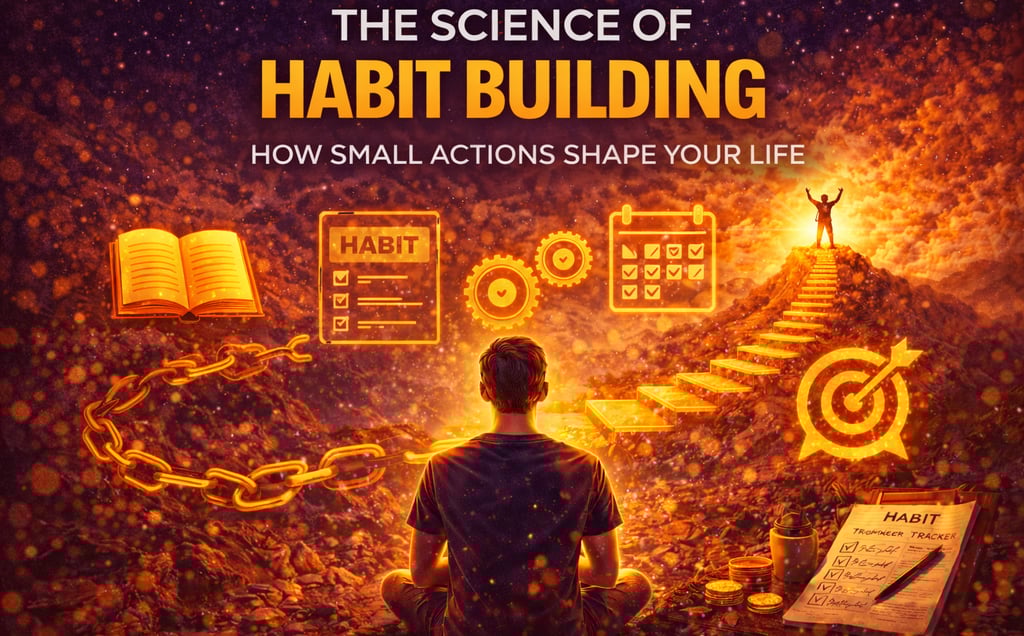
The Science of Habit Building
Your life today is largely a reflection of your habits.
The way you start your morning.
How you spend your time.
The decisions you repeat daily.
All of these patterns shape your results over time.
Success is rarely the result of one big decision.
It is usually the outcome of small actions repeated consistently.
This is why understanding the science of habit building can be one of the most powerful tools for personal growth.
What Is a Habit?
A habit is a behavior that becomes automatic through repetition.
Instead of requiring conscious effort, habits run almost automatically in your brain.
Examples include:
brushing your teeth
checking your phone
drinking coffee in the morning
following your daily routine
Once a behavior becomes a habit, your brain performs it with minimal mental effort.
This allows you to conserve energy and focus on other tasks.
How Habits Are Formed
Habits are built through a process known as the habit loop.
This loop consists of three components:
1. Cue
A cue is the trigger that starts a behavior.
Examples include:
waking up
receiving a notification
finishing a meal
The cue signals your brain that it is time to perform a certain action.
2. Routine
The routine is the behavior itself.
For example:
drinking coffee
opening social media
exercising
reading a book
The routine becomes easier each time it is repeated.
3. Reward
The reward is the benefit your brain receives from the behavior.
Rewards can include:
pleasure
relaxation
satisfaction
accomplishment
Over time, your brain begins to associate the cue with the reward.
This strengthens the habit.
Why Habits Are So Powerful
Habits influence a large percentage of your daily actions.
Because they operate automatically, they require very little willpower.
This means habits can either support your goals or quietly work against them.
Positive habits create progress.
Negative habits create stagnation.
Understanding this allows you to intentionally design habits that improve your life.
The Role of Consistency
Habits are built through repetition.
The more often you repeat a behavior, the stronger the neural pathways in your brain become.
This is why consistency matters more than intensity.
For example:
Reading 10 pages every day is more powerful than reading an entire book once a month.
Small consistent actions compound over time.
This idea connects directly with The 1% Daily Improvement Strategy, where small improvements lead to significant long-term growth.
Why Breaking Bad Habits Is Difficult
Bad habits can be difficult to break because they provide immediate rewards.
Activities such as:
scrolling social media
eating junk food
procrastinating important tasks
deliver quick dopamine rewards.
As discussed in Dopamine Detox Explained Simply, these quick rewards train the brain to prefer instant pleasure over long-term goals.
Breaking bad habits often requires reducing these triggers and replacing them with healthier routines.
How to Build Better Habits
Building strong habits requires a structured approach.
Here are several effective strategies.
1. Start Small
One of the biggest mistakes people make is starting with habits that are too difficult.
Instead, start with small actions that are easy to repeat.
Examples:
read for 5 minutes
exercise for 10 minutes
write a few sentences daily
Small habits build momentum.
2. Attach Habits to Existing Routines
A powerful technique called habit stacking involves attaching a new habit to an existing one.
For example:
read after your morning coffee
stretch after brushing your teeth
review goals before starting work
This uses existing cues to trigger new behaviors.
3. Remove Friction
Make good habits easier to perform.
Prepare your environment in advance.
Examples:
keep a book on your desk
place workout clothes nearby
remove distractions from your workspace
The easier the habit, the more likely you are to repeat it.
4. Track Your Progress
Tracking habits provides visual evidence of progress.
Habit trackers, journals, or simple checklists can increase consistency.
Each completed action reinforces your identity as someone who follows through.
This idea connects closely with How to Rewire Your Identity in 30 Days, where repeated actions shape self-belief.
5. Focus on Identity
The strongest habits are connected to identity.
Instead of saying:
“I want to read more.”
Think:
“I am a reader.”
Instead of:
“I want to exercise.”
Think:
“I am someone who trains regularly.”
Identity-based habits are more sustainable because they align behavior with self-belief.
Habits and Self Discipline
Habits and discipline work together.
Discipline helps you start new behaviors.
Habits make those behaviors automatic.
In The Complete Guide to Self Discipline, we discussed how disciplined actions repeated consistently eventually turn into habits.
This transformation reduces the need for constant willpower.
The Compound Effect of Habits
Small habits may seem insignificant at first.
But over time they compound.
A small improvement repeated daily can lead to dramatic changes over months and years.
This is how ordinary actions produce extraordinary results.
Consistency transforms small behaviors into powerful life-changing routines.
Final Thoughts: Design Your Habits, Design Your Life
Your habits shape your future.
Every small action you repeat becomes part of your identity and daily routine.
When you intentionally design positive habits, you gradually transform the direction of your life.
Focus on small improvements.
Repeat them consistently.
And allow the science of habit building to work in your favor.
FAQ
What is habit building?
Habit building is the process of creating automatic behaviors through consistent repetition.
How long does it take to build a habit?
Habit formation varies, but research suggests it can take several weeks to months depending on consistency.
What is the best way to build habits?
Start with small actions, repeat them consistently, and connect them with existing routines.